Carbon Emission Calculation

Carbon emissions are the release of greenhouse gases (GHGs) such as carbon dioxide (CO2), methane (CH4), and nitrous oxide (N2O) into the atmosphere. These gases are produced from activities like energy use, transportation, industrial operations, and supply chains. They are a major cause of global warming and climate change. Measuring these emissions correctly is the first step toward climate action.

Three pillars of ESG

🌍 Environmental
  • • Energy usage and efficiency
  • • Climate change strategy
  • • Waste reduction
  • • Biodiversity loss
  • • Greenhouse gas emissions
  • • Carbon footprint reduction
👥 Social
  • • Fair pay and living wages
  • • Equal employment opportunities
  • • Employee benefits
  • • Workplace health and safety
  • • Community engagement
  • • Responsible supply chain partnerships
  • • Adhering to labor laws
⚖️ Governance
  • • Corporate governance
  • • Risk management
  • • Compliance
  • • Ethical business practices
  • • Avoiding conflicts of interest
  • • Accounting integrity and transparency

Overview of Different scopes of emissions

At endecarb, we provide carbon emission calculation services that help organizations measure, manage, and reduce their environmental impact.
Our approach follows global standards like the GHG Protocol and covers:

Scope 1 (All Direct Emissions)

All direct emissions from the activities of an organization or under their control. Include fuel combustion on site such as gas boilers, fleet vehicles, and air-conditioning leaks.

Scope 2 (Indirect Emissions)

Indirect emissions from electricity purchased and used by the organization. Emissions are created during the production of the energy and eventually used by the organization.

Scope 3 (All other indirect emissions)

All other indirect emissions related to an organization, occurring from sources that they do not own or control like emissions associated with procurement, transport and distribution, product use, and waste disposal.
These can also be the most challenging to address.
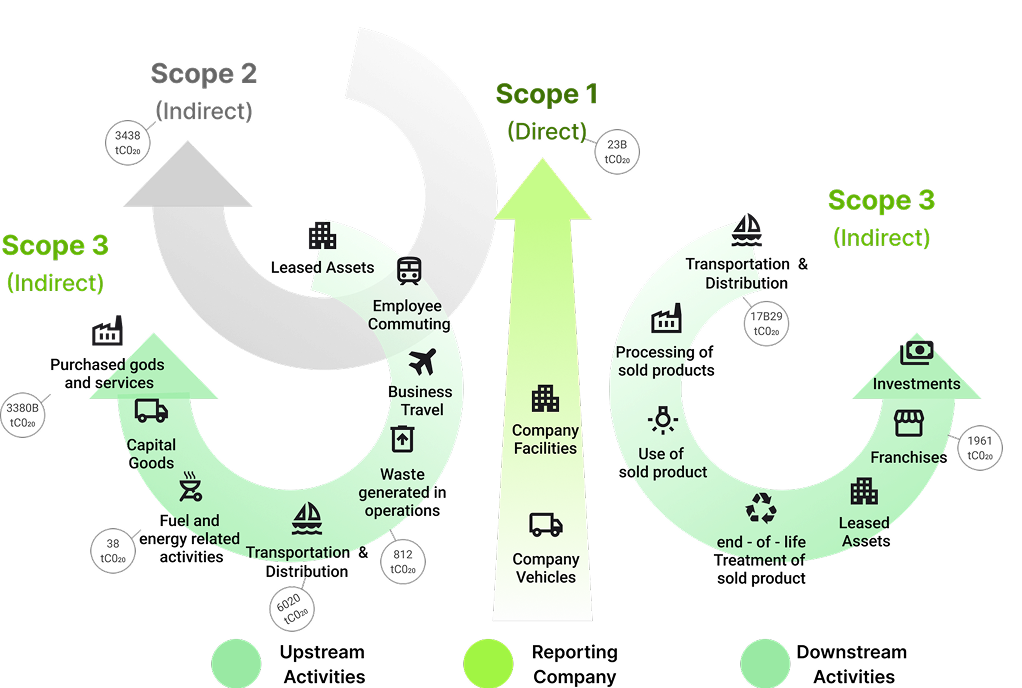
Scope of Emissions Diagram

Why Carbon Accounting Matters

Net Zero Foundation Icon

Foundation for Net-Zero

By establishing a reliable emissions baseline, carbon accounting enables organizations to set science-based targets and chart realistic pathways toward net-zero and long-term decarbonization.

Compliance Icon

Compliance with Frameworks

It ensures alignment with global standards like BRSR, GRI, TCFD, CDP, IFRS, and CSRD, helping companies stay ahead of evolving regulations and avoid compliance risks.

Investor Trust Icon

Builds Investor Trust

Transparent and verifiable carbon disclosures strengthen stakeholder confidence, attract climate-conscious investors, and showcase responsible governance.

Efficiency Icon

Improves Efficiency & Cuts Costs

Carbon accounting highlights inefficiencies in operations and supply chains, enabling organizations to optimize energy use, reduce emissions, and lower costs simultaneously.

Our Edge

We use advanced tools and audit-ready methods to deliver accurate carbon footprints. Our services help businesses stay compliant, track progress on climate goals, benchmark with peers, and create effective sustainability roadmaps.

Our GHG Accounting module provides organizations with a clear edge by combining accuracy, automation, and compliance. Unlike manual or fragmented approaches, the tool offers:

Automated Data Capture & Cleaning

Seamless ingestion from ERP, utility bills, CSV, and integrations reduce manual errors.

Comprehensive Scope Coverage

Scope 1, 2, and all 15 categories of Scope 3 aligned with the GHG Protocol.

Evidence-backed Reporting

Row-wise or bulk upload with supporting documents ensures audit-readiness.

Regulatory Alignment

Built-in compliance with BRSR, CDP, SBTi, and other global frameworks.

Real-time Insights

Intuitive visualization of emissions data for tracking and communicating progress.